


By Sara Beth Williams–
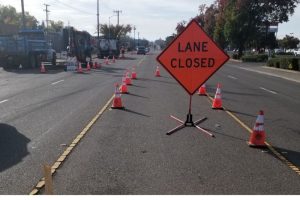
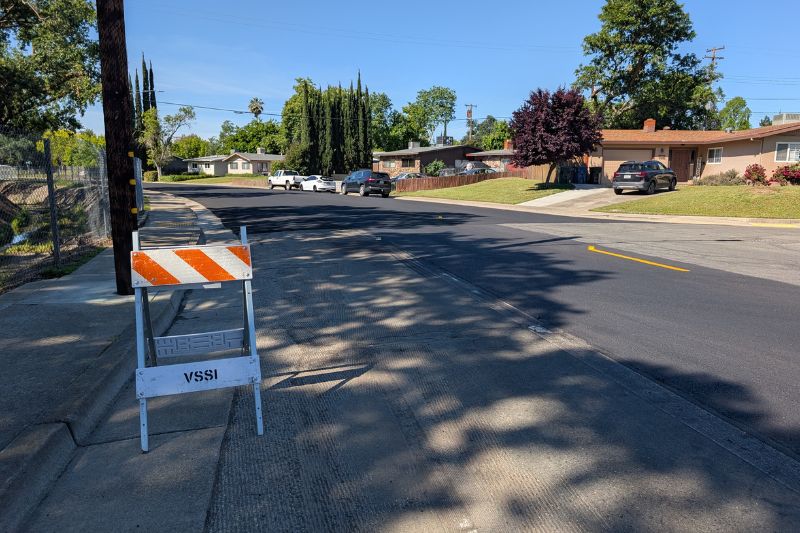
Hundreds of streets have been identified for resurfacing and repairs through the city’s three-year pavement preservation program, adopted by the Citrus Heights City Council in 2023. Several arterial streets are already currently undergoing resurfacing this spring.
But before a road is resurfaced, several steps need to be taken, some of which take a lot of time.
In an interview, city staff explained that completing a street resurfacing consists of five steps total, including restriping, which is the final step after resurfacing.
Drainage and accessibility upgrades
The first step involves repairing drains and accessibility along the streets marked for resurfacing. Certain levels of damage trigger required accessibility upgrades, the General Services Department says. The reason repairs and upgrades are completed before any resurfacing is done is to minimize the need to tear up asphalt again after putting in the work to resurface it.
City Engineer Leslie Blomquist reported to the City Council on April 8 that drainage and accessibility upgrades for the first group of streets marked for resurfacing were recently completed over last fall and winter.
The 2025 drainage and accessibility upgrade project cost $4.1 million and resulted in the construction of 128 curb ramps, 17,000 square feet of sidewalk repair, 3,900 linear feet of curb and gutter repair, and 2,200 feet of storm drain repair and updates.
Now that the storm drains and accessibility upgrades have been completed, multiple streets are currently being, and scheduled to be, resurfaced between now and the end of the summer. Afterward another round of drainage and accessibility upgrades will begin on the next set of streets.
Crack sealing
The second step in resurfacing a roadway is completing a crack seal. Crack sealing is a pavement maintenance technique that involves applying a specialized, hot-applied rubberized adhesive sealant into open cracks in asphalt or concrete roads. It acts as a waterproof barrier, preventing moisture from entering the sub-base, which significantly slows deterioration and extends pavement life by three to five years.
Asphalt repair
The third step, the city said, is localized asphalt pavement repairs, which may appear like patches or spot treatments over large, cracked street surfaces.
Localized asphalt repair is the targeted fixing of specific, damaged areas, such as potholes, cracks, or structural failures. The process is important to ensure overall even coverage and a solid foundation for the resurfacing so that old damage doesn’t show in the new coverage. Asphalt repair can involve micro milling, milling, and removing and replacing small sections of damaged pavement.
While patching is a temporary fix for specific spots, combining it with resurfacing after repairs makes the resurfacing last significantly longer.
This is generally followed by removing all existing old striping as well, the city says.
Resurfacing and restriping.
The fourth step is the final resurfacing of the street, followed by restriping the entire street at a later time. The street must have time to cure before full restriping is complete, the city explained.
The crack sealing, asphalt repair, resurfacing and restriping can take many days or even weeks, depending on many factors, particularly weather conditions.
For streets that draw a higher volume of traffic, repairs and resurfacing can take much more time. City staff must coordinate construction with multiple groups, including utility companies, garbage haulers, street sweeping, local schools, and more, to ensure phases of resurfacing don’t interfere with school schedules or garbage collection, for example.
Anyone with questions or concerns is welcome to contact the city’s General Services Department.
Want to find out when your street is scheduled to be resurfaced? See the full list of streets slated for resurfacing.
Related: Here’s what roadway projects are coming up in Citrus Heights – Citrus Heights Sentinel