



By Sara Beth Williams–
The City Council Wednesday night officially gave the green light for the city to implement a new ordinance targeting vacant commercial buildings in the city, in hopes of motivating property owners to fill vacancies more quickly.
The Commercial Property Reoccupancy Program ordinance was already presented once to the City Council on Jan. 28, for a first reading, and was unanimously approved by the council at that time.
“Following the previous council meeting, city staff became aware that some community stakeholders were not aware the ordinance would be considered by the City Council on January 28,” city staff said, adding that all legal requirements were met, including the requirement to publish a notification of the Jan. 28 public hearing in a print newspaper of general circulation, which is required by California state law.
However, staff determined that other outreach materials intended to notify parties about the updated ordinance and meeting did not include the date of the City Council hearing unless the email recipient clicked on link to a webpage.
Following the discussion on the ordinance Wednesday night, one public commentor, who said he was a real estate broker, wanted to know how high the vacancy rate was in the city, and questioned the impact of raising costs for property owners.
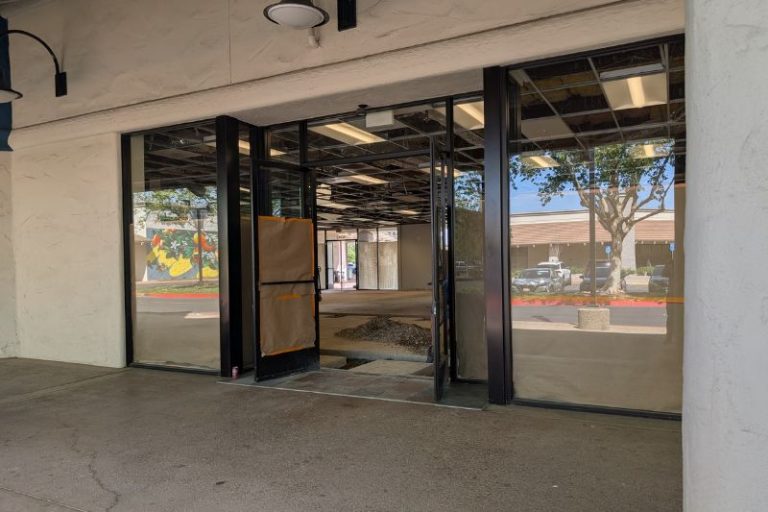
Community Development Department Director Casey Kempenaar said he estimated at least 50 buildings were vacant in the city, with some that have been vacant for a long time, which causes problems.
Economic Development and Community Engagement Director Meghan Huber said during the meeting that the retail vacancy rate stands at just over 10 percent, and the city’s office space vacancy rate is just under 10 percent.
Both directors said the vacancy rate fluctuates, and that the ordinance is designed to be proactive, and to address long-term vacancies.
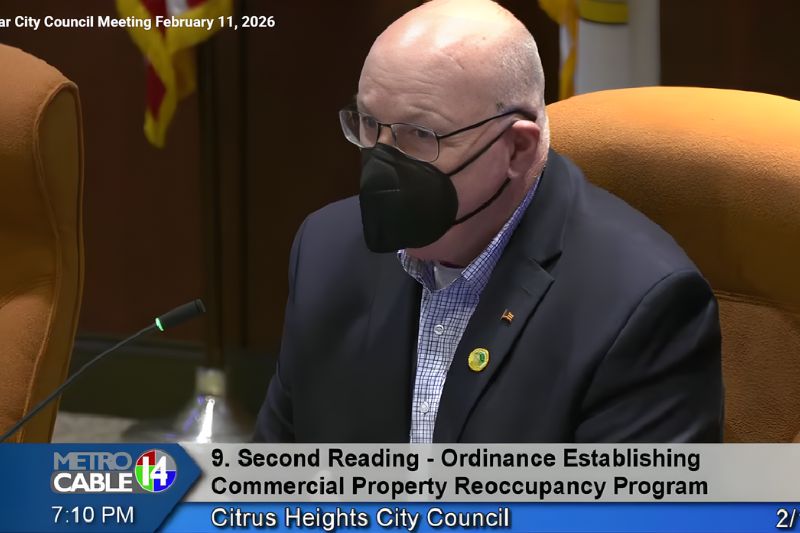
Councilmember Tim Schaefer said that many of the property owners who are complaining aren’t providing any alternative solutions, and many property owners not addressing neglected properties are located out of state and country.
“We have a problem,” Schaefer said, adding that many vacant buildings are blighted and aren’t being maintained or fixed, with one in particular that has had a caved in roof for years.
“If you’re taking good care of your property, this won’t cost you a nickel,” Schaefer said.
Vice Mayor Porsche Middleton acknowledged that the city has attempted to be proactive, but received only three responses out of 468 letters sent to property owners in 2025.
“We have to move along,” Middleton said.
The proposed Commercial Property Reoccupancy Ordinance establishes specific guidelines for commercial property owners in Citrus Heights, requiring owners of vacant commercial buildings to register their properties with the city and maintain minimum safety, security, and aesthetic standards during periods of vacancy.
The proposed program is designed for “cost recovery,” the city said, adding that built-in flexibility, including fee waivers for property owners who meet minimum safety, aesthetic, and security standards means the program “is not expected to fully recover administrative costs.” The city has emphasized that property owners who proactively register and comply with standards qualify for a fee waiver and will incur zero cost.
For those who don’t self-register, or qualify for a fee waiver, annual costs for property owners of properties smaller than one acre in size will be $2,220. Property owners with properties larger than one acre will pay a total of $6,600 annually.
The City Council voted unanimously on Feb. 11 to pass the ordinance.
Before going into effect, the program will undergo an initial implementation phase which could take months, during which the city will establish internal procedures, develop fee collection systems, and conduct outreach to commercial property owners and stakeholders prior to full implementation, the city said.
City staff also plan to return to the City Council six months after the program has been officially implemented to provide an update on the progress of the ordinance.
A schedule of fees for the ordinance, which set the fees for annual registration and annual monitoring, was unanimously approved on Jan. 28.
Fees are structured to offset staff time and resources, and to reduce reliance on the General Fund, the city said. Under-recovered costs are anticipated to be offset by reducing calls for service and preventing blight and neglect that has resulted in the use of more intensive enforcement and General Fund resources.
The city also notes fees may be updated annually based on the US Bureau of Labor Statistics Consumer Price Index.
Related: Citrus Heights approves new fees targeting vacant commercial buildings – Citrus Heights Sentinel