


By Sara Beth Williams–
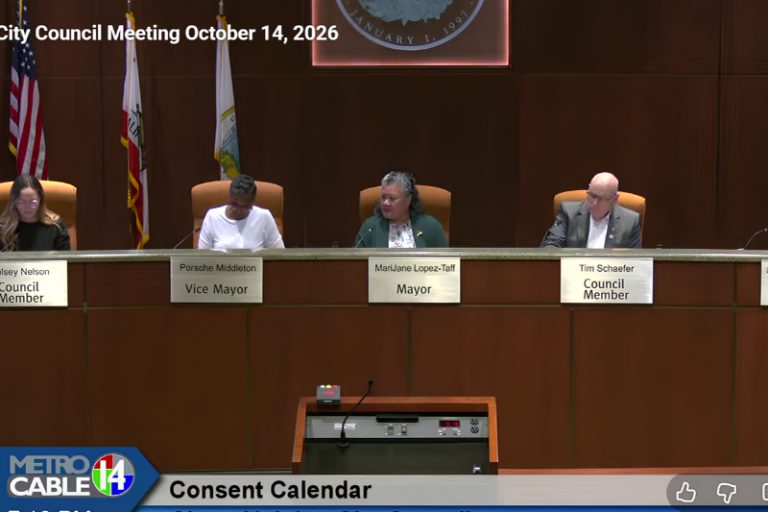
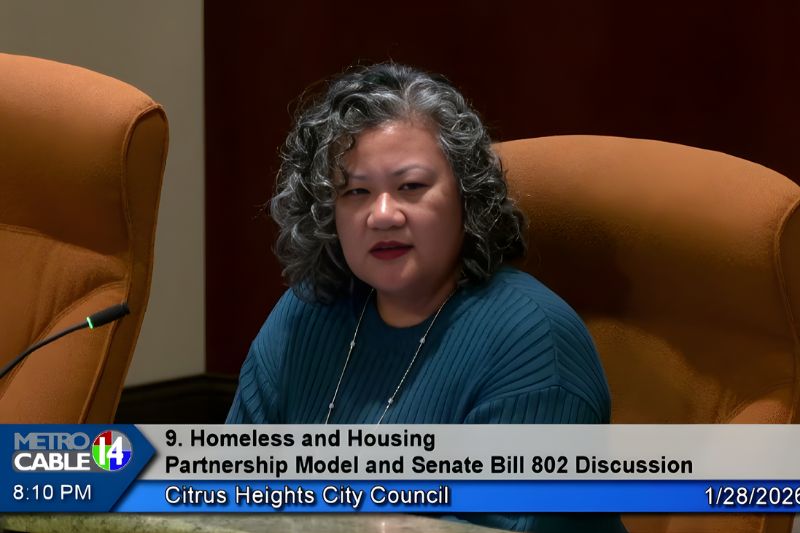
The Citrus Heights City Council on Wednesday voted with some reluctance to remain neutral on both a homeless and housing partnership model and Senate Bill 802 after a presentation from Sacramento County and significant discussion.
Introduced in June 2025 by Senator Angelique Ashby, Senate Bill 802 proposes the creation of a Sacramento Area Housing and Homelessness Agency, or SAHHA. The bill would restructure the Sacramento Housing Redevelopment Agency with the goal of consolidating regional housing and homelessness programs and funding.
If passed, the bill would change the governance of housing and homelessness initiatives across the region, and it would create an 11-member board of electeds, including three from the city of Sacramento, three from Sacramento County, two from Elk Grove, and one each from Citrus Heights, Rancho Cordova, and Folsom.
Initially, Citrus Heights, along with other cities and Sacramento County, opposed the bill because it would eliminate local control over funding that is allocated to each city.
“This bill was introduced without input from local governments,” Citrus Heights Housing & Human Services Program Coordinator Nicole Piva said.
After feedback was given during meetings between Ashby and multiple city mayors and city managers from jurisdictions in Sacramento County, Citrus Heights City Manager Ash Feeney and then-mayor Jayna Karpinski-Costa reported that Ashby said she would include language that protects local funding sources.
Related: Citrus Heights clarifies position on SB 802 – Citrus Heights Sentinel
The city said in an update that amendments with previously negotiated terms regarding cities maintaining local control over some funding sources have been released by Ashby, but the senator also added that “if all three cities—Citrus Heights, Elk Grove, and Rancho Cordova—did not withdraw their opposition, local control protections would be removed and all housing funds from all three cities would be redirected to the new SAHA,” Piva said.
Despite promises made by Ashby that some funding sources would remain in the control of Citrus Heights, and in light of the threat of losing the promised local control altogether unless cities drop their opposition, Councilmember Tim Schaefer expressed deep concern, saying that if Citrus Heights were forced to join a Joint Powers Authority on homelessness, the state could change its mind next year or in future years to come regarding whether Citrus Heights would be able to receive and allocate funding locally.
“I will fight tooth and nail to oppose this because I think it’s an absolute overreach on the state’s jurisdiction,” Schaefer said.
Vice Mayor Porsche Middleton, and others, expressed concern that not all funding sources, such as Permanent Local Housing Allocation (PLHA) funding and other similar programs, would be promised to be retained by local cities.
The City of Citrus Heights said they have reached out to Ashby’s office for clarification but have not heard back.
According to the Jan. 28 agenda packet, the total PLHA allocation for 2019-2023 is $1,807,485, which supports eligible housing-related activities.
The Five-Year Spending Plan attached in the packet provides detailed allocations by year and activity.
Middleton also expressed concern regarding a joint powers authority board and called for geographical equity and for fairer voting procedures.
“We as a smaller suburban area could be easily overtaken and outvoted,” Middleton said, calling for a supermajority voting requirement when it comes to decision-making, particularly in terms of funding allocation.
While expressing varying degrees of reluctance, the council agreed that they would be willing to remain neutral in reference to SB 802, as long as the bill included a list of conditions in its published language.
Feeney suggested that conditions should include language that explicitly grants the right for cities in Sacramento County to retain local control over funding sources in perpetuity.
Other conditions that council members expressed a desire to see added to the language of the Senate bill included the security of all local funds, not just certain local funding; requiring a supermajority voting process; stronger geographical equity; and addressing unfunded mandates for staffing for a new board.
Feeney also suggested adding that Ashby consider shelving the bill and allowing the City of Citrus Heights to work with the County of Sacramento and other county jurisdictions to create their own homelessness and housing partnership model together.
With the conditions laid out to be included in a letter to the senator’s office, the council voted unanimously to agree to move to a neutral stance on SB 802, subject to the inclusion of the provisions provided by Feeney being added to the language of the bill. Schaefer attended the council meeting and voted remotely.
Schaefer said it would be “very telling” if the senator didn’t agree to allow Citrus Heights to retain local control over funding sources in perpetuity.
Piva reported that the Sacramento City Council voted 7-2 in favor of forming a Joint Powers Authority, while Rancho Cordova has agreed to a stance of neutrality.
The county of Sacramento will be presenting and asking the City of Galt and the City of Folsom for feedback on both the housing and homelessness partnership model and on SB 802 later in February. Elk Grove City Council also heard a presentation from Sacramento County on Jan. 28.