

By Sara Beth Williams–
In 2018, a little more than 150 years after his great grandfather purchased a large swath of acreage off Sunrise Boulevard in Citrus Heights, Ted Mitchell sold what remained of his property to a housing developer.
The original 160-acre ranch land, purchased in the mid-1800s, is now comprised of an electric substation, two apartment complexes, a new housing development and accompanying nature preserve, several strip malls with stores and restaurants—and one 1980s adobe brick home still owned by Mitchell.
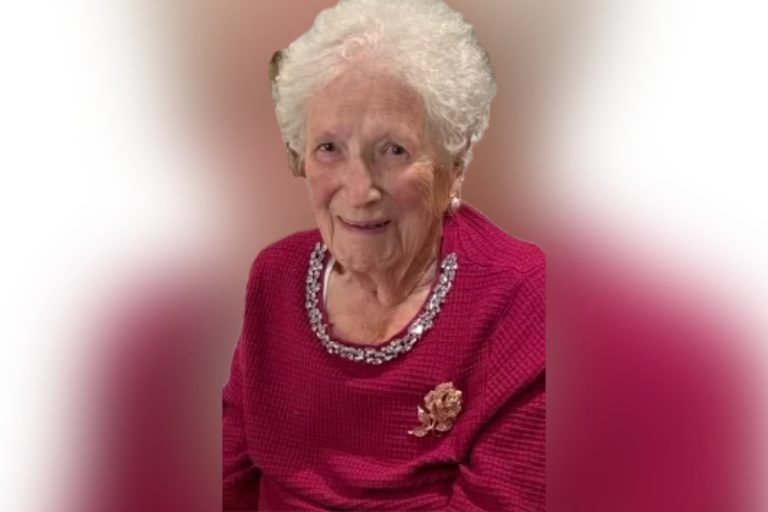
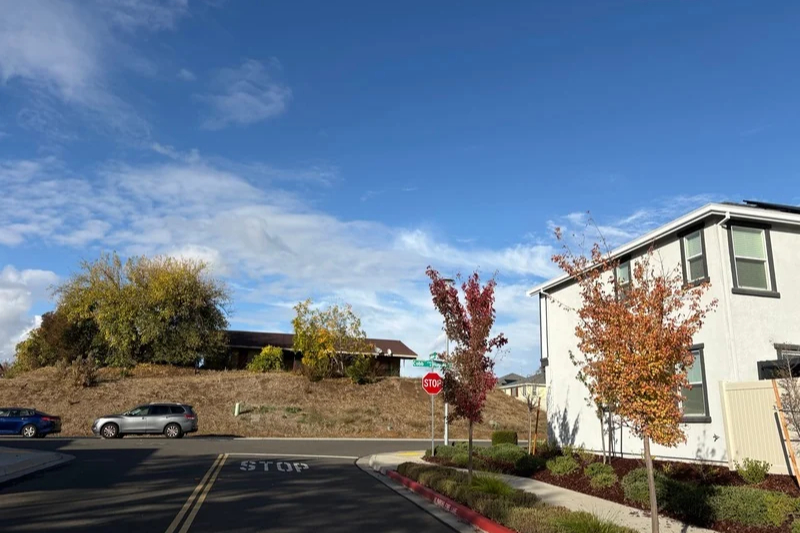
Over 260 homes were built on about half of the property in the early 2020s, with the rest of the land dedicated as a nature preserve, as it fell on a flood plain. Mitchell was in his 90s at the time that he sold the land. He turned age 100 in March.
Although retired, Mitchell still maintains ties to the family property. Citrus Heights Historical Society president Larry Fritz said Mitchell still owns the adobe brick home he chose to keep within Mitchell Village, even after developers offered to build him a replacement home.
Mitchell’s house, built in the 1980s, now sits tucked in between rows of new homes built between 2022 and 2024, Fritz said.
Mitchell’s great-grandparents, Edward and Zenobia Crabb, immigrated from England and purchased 160 acres of farmland at the northeast corner of Greenback Lane and Sunrise Boulevard in 1866. At the time, wheat and hay were the only commercially viable crops, due to a lack of irrigation.
According to the local Historical Society, during the dry farming era from 1850 to about 1920, families began buying 160-acre tracts of land from the US government at $10 in gold coin per acre. Every farm had a hand-dug well which provided enough water for domestic use, along with a few fruit trees and a small garden.
Settlers depended on rainwater to grow crops. The area’s five-month seasonal drought limited what could be grown to mainly wheat or hay. Wheat was in high demand for human consumption and hay for horses and livestock, so the crop worked well for many years.
Farmers also turned all of the cleared oak trees into a crop they could sell, by converting the wood into charcoal, which could be sold to businesses in Sacramento.
By 1920, Mitchell’s grandfather, Edward Clay, expanded their farmland into vineyards of grapes, and also grew olives, once water became available through irrigation.
The land around the rows of vineyards changed dramatically over the decades, with urban development popping up all over between the 1950s and 1980s. The land was even turned into a golf club for many years, until Mitchell at last sold it to a housing developer in 2018.
During redevelopment of the property in the 2020s, the land underwent restoration work, according to a Citrus Heights Historical Society documentary, “Ted’s Story.” The new development, called Mitchell Village, includes a nature preserve with walking trails and a new park.
Mitchell currently divides his time between that home and staying with his son and daughter.
Have a news tip or want to share your thoughts on this? Contact us here.